What Defines a Good Preschool ?
- Published
- Written by
- Mubin Socialvibes@gmail Com
- Reading time
- 4 min read
A Complete Guide for Parents
Choosing the right preschool is one of the most important decisions parents make in the early years. A good preschool lays the early learning foundation that shapes a child’s confidence, curiosity and love for learning. But with so many options available, understanding what defines a good preschool becomes essential. Below is a clear, parent-friendly guide that highlights the qualities of a good preschool, key preschool selection criteria and how to ensure you are choosing a quality preschool for your child.
1. A Nurturing and Safe Environment
A strong preschool begins with a warm, secure and nurturing learning environment where children feel comfortable and confident. The spaces should be bright, clean and thoughtfully organised to support holistic child development. A good preschool encourages children to explore freely while ensuring their safety, both indoors and outdoors. This environment forms the emotional foundation for children to engage, adapt and learn joyfully every day.
2.Trained, Caring and Observant Teachers
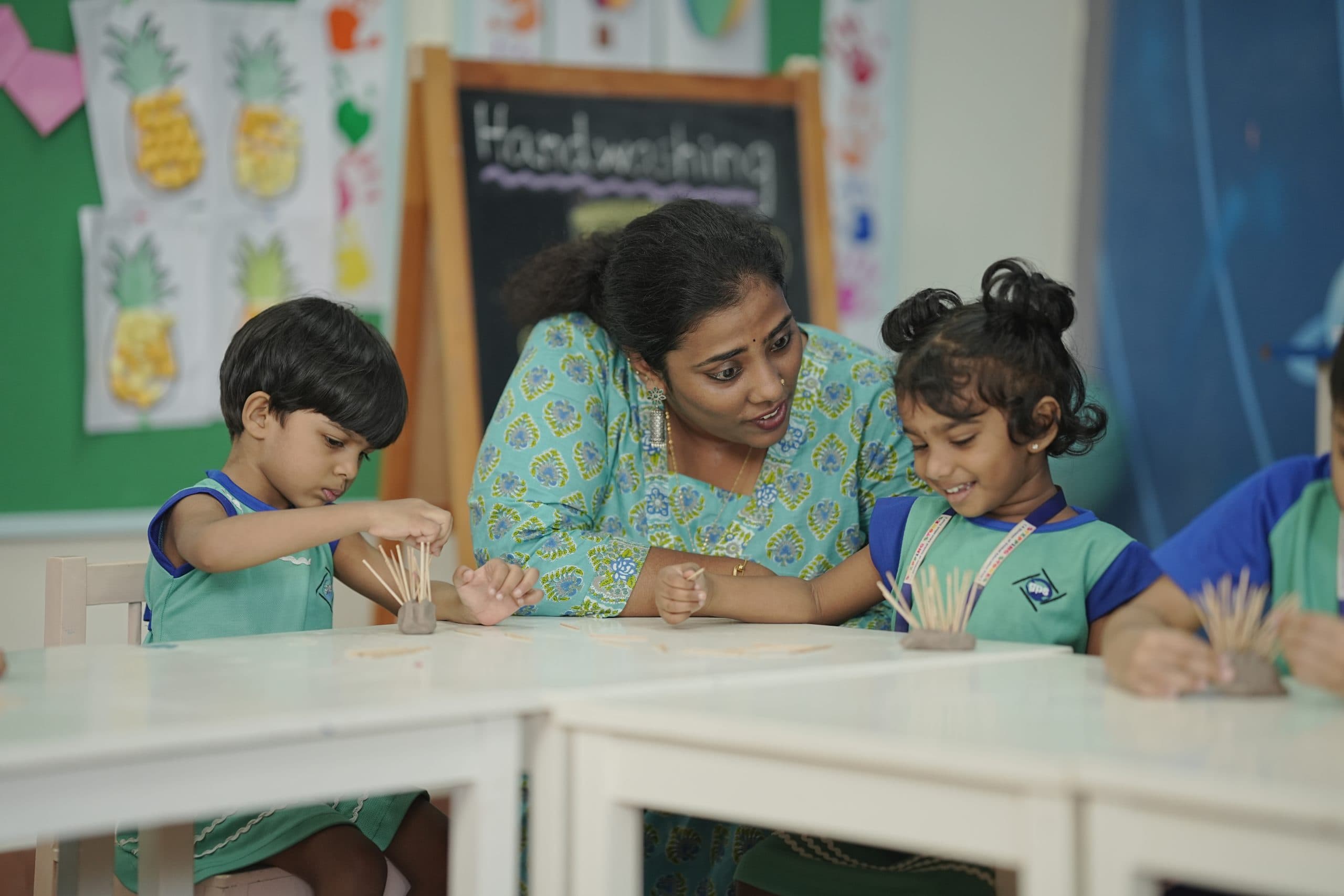
One of the most important features of a good preschool is its teachers. Skilled educators understand early childhood behaviour, guide children with empathy and create meaningful interactions. They observe how each child learns and tailor experiences that support language development, social skills and motor skill development. When teachers are patient and encouraging, children feel valued and secure.
3.A Balanced, Play-Based Curriculum
A key part of choosing a quality preschool is examining the curriculum. Good preschools focus on play as the primary mode of learning. Activities such as storytelling, hands-on experiments, creative art, music, movement and outdoor play create an interactive learning environment where children learn naturally. Instead of academic pressure, the curriculum supports early childhood care and education through exploration and meaningful experiences that strengthen all developmental domains.
4.Focus on Social and Emotional Growth
Preschool is a child’s first introduction to a structured social setting. An excellent preschool helps children learn to share, express themselves, take turns, and understand emotions- important aspects of holistic child development. Group activities, guided conversations and daily routines encourage confidence, empathy and independence.
5.Opportunities for Motor Skill Development
Fine motor activities like threading, drawing and building with blocks, paired with gross motor opportunities like climbing, running and balancing, ensure children strengthen both physical and cognitive abilities. A good preschool naturally incorporates these into daily routines, helping children build body awareness, coordination and strength.
6.Strong Parent-School Communication
When evaluating how to choose a preschool, communication should be a major factor. Quality preschools maintain open and transparent communication through updates, meetings and feedback channels. This partnership ensures parents feel involved and confident and children receive consistent guidance across home and school environments.
7.Health, Hygiene and Safety Practices
Parents should look for preschools that prioritise health and safety. Clean classrooms, sanitised toys, proper handwashing routines and supervised play indicate strong management and responsible early childhood care and education practices. These routines teach children lifelong habits while keeping them safe.
8.Encouragement of Independence and Responsibility
-
A good preschool gently encourages children to do simple tasks independently like tidying up, choosing materials, packing their things or washing hands. These small routines help build selfreliance, decision-making and a sense of responsibility, which support overall holistic child development.
9.Clear Preschool Selection Criteria for Parents
- Is the environment safe, clean and child-friendly?
- Are the teachers trained and nurturing?
- Does the curriculum focus on interactive, play-based learning?
- Is there a strong emphasis on social-emotional and motor skill development?
- Does the school maintain consistent parent communication?
- Are health and safety protocols firmly in place?If the answer is yes to most of these, you’re likely looking at a strong preschool option.
What Defines a Good Preschool?
A good preschool is one that nurtures the whole child. It blends caring teachers, meaningful playbased learning, engaging environments and strong school-parent partnerships to provide a strong early learning foundation. When these elements come together, children develop confidence, curiosity, social skills and a genuine love for learning and qualities that shape their educational journey for years to come. In essence, a good preschool brings together several key elements:
- a safe and stimulating environment,
- caring and skilled teachers,
- a rich play-based curriculum,
- strong parent partnerships and
- meaningful opportunities for emotional and social growth.When these come together, school becomes the perfect foundation for a child’s bright future. A goodpreschool is one where children walk in with curiosity and walk out with joy, feeling proud of whatthey discovered each day. It is a place where the love for learning begins that lasts a lifetime.