Facilitating Inquiry-Based Learning
March 27, 2026 2026-03-27 11:32Facilitating Inquiry-Based Learning
Facilitating Inquiry-Based Learning
The Teacher’s Role in an IB Classroom
What makes learning truly meaningful? In many traditional classrooms, teachers deliver knowledge while students absorb information. In IB schools, however, the process looks very different.
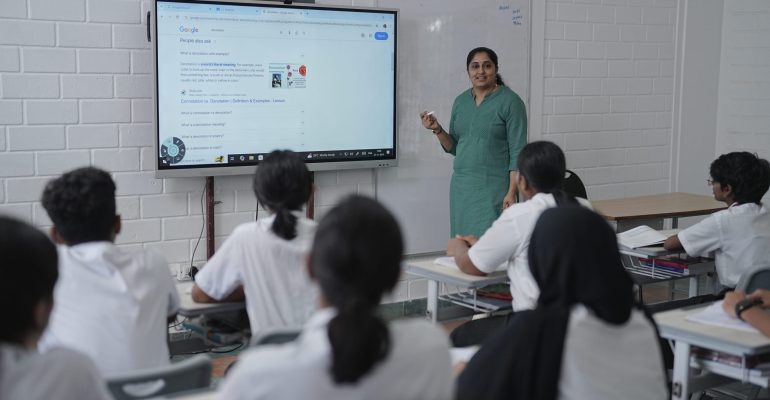
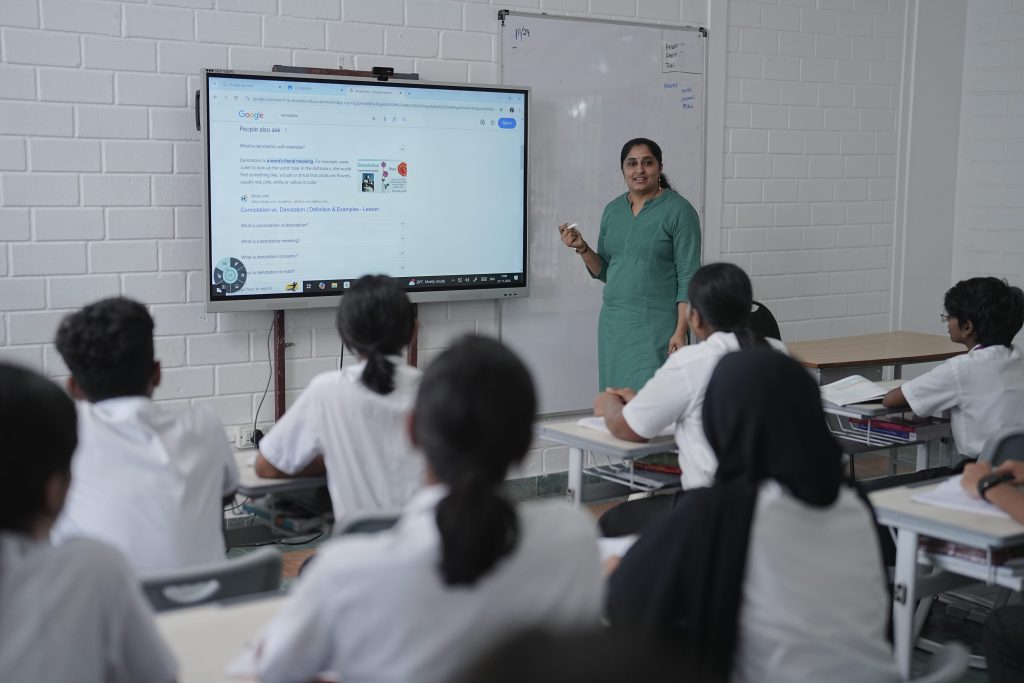
At the best IB schools, teachers are not simply instructors, they are facilitators of enquiry. Their role is to guide curiosity, nurture critical thinking and help students discover knowledge through exploration.
This approach is central to the IB teaching methodology, where learning is driven by questions, reflection and real-world connections. The result is a classroom where students take ownership of their learning journey while teachers provide thoughtful guidance and support.
Understanding the IB Teaching Philosophy
The International Baccalaureate (IB) is recognised globally for its academic rigour and holistic approach to education. What distinguishes IB education around the world is the philosophy that students learn best when they actively construct knowledge.
Rather than memorising facts, IB learners are encouraged to:
- Ask meaningful questions
- Explore concepts across subjects
- Analyse information critically
- Apply knowledge in real-life contexts
Teachers play a key role in shaping this environment. Through careful planning and facilitation, they transform classrooms into spaces where curiosity thrives.
Inquiry-Based Learning in IB Classrooms
One of the defining features of IB pedagogy and teaching approach is inquiry-based learning. In this model, students investigate topics through guided exploration rather than passive listening.
How IB Teachers Support Inquiry-Based Learning in Classrooms
A skilled IB educator does several things differently:
1. Encourages questioning
Teachers prompt students to ask “why” and “how,” turning curiosity into investigation.
2. Designs meaningful learning experiences
Lessons often include experiments, research projects, discussions and collaborative tasks.
3. Connects learning to real life
Students explore global issues, environmental challenges and social themes through interdisciplinary inquiry.
4. Guides reflection and understanding
Teachers encourage students to analyse their own thinking and learning processes.
These strategies are widely recognised as some of the most effective teaching methods used in IB schools globally.
The Role of Teachers in the IB Curriculum
The role of teachers in the IB curriculum extends far beyond delivering lessons. Teachers act as mentors, facilitators and co-learners in the classroom.
Key responsibilities of IB teachers include:
- Creating environments that encourage student-led learning in IB classrooms
- Supporting independent research and investigation
- Helping students develop critical thinking and analytical skills
- Providing personalised feedback
- Encouraging collaboration and discussion
In essence, the teacher becomes a guide who supports students as they explore ideas and develop deeper understanding.
Concept-Based Learning in IB Schools
Another important aspect of the IB teaching methodology is concept-based learning.
Instead of focusing only on isolated topics, IB teachers help students explore larger ideas such as:
- change
- systems
- relationships
- responsibility
- global perspectives
This approach allows students to make connections between subjects and see how knowledge applies in the real world.
For example, a unit exploring climate change might combine science, geography, economics and ethics, demonstrating the power of concept-based learning in IB schools.
Why Trained IB Teachers Make a Difference
The effectiveness of IB education depends greatly on teacher expertise. Educators in top IB schools undergo specialised professional development to understand the IB philosophy and teaching strategies.
The importance of trained teachers in IB schools
Well-trained IB teachers bring several advantages:
- Deep understanding of IB pedagogy and teaching approach
- Ability to guide inquiry without controlling it
- Expertise in assessment methods that evaluate understanding rather than memorisation
- Skills to support diverse learning styles through a personalised learning approach
Because of this, schools that prioritise teacher development often become recognised among the best IB schools.
Holistic Education Through IB Teaching
IB teachers also play a critical role in nurturing the whole child.
In holistic education in IB schools, teachers help students grow not only academically but also socially, emotionally and ethically.
Students are encouraged to develop:
- empathy and global awareness
- leadership skills
- creativity and innovation
- resilience and self-management
These qualities prepare students for success not just in academics, but in life.
The Impact of Great IB Teachers on Students
Students who learn in inquiry-driven environments often demonstrate:
- Strong research skills
- Independent thinking
- Confidence in communication
- Ability to collaborate and solve complex problems
These attributes explain why many parents seeking IB schools should prioritise institutions with strong teaching teams and inquiry-focused classrooms.
Teachers Who Inspire Enquiry Create Lifelong Learners
In IB classrooms, teachers do far more than teach, they inspire discovery. By facilitating enquiry, guiding exploration and nurturing curiosity, IB educators help students become confident learners who understand the world around them.
For parents exploring IB schools or searching for the best IB schools in Kochi, the quality of teaching should be the defining factor.
Because ultimately, great schools are built on great teachers.