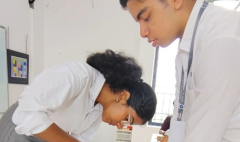
The Art of Observation in Education
December 26, 2025 2025-12-26 16:28The Art of Observation in Education


Learning from Everyone Around Us: The Power of Observation
One of the most meaningful skills we develop often without noticing is the ability to observe. Observation helps us understand people, connect with them and learn from every interaction we experience. In education, especially during the foundational years, observation plays a quiet but powerful role in shaping how children think, communicate and interpret the world around them. It becomes the bridge between what they see and what they understand.
Why Observation Matters in Childhood
Children are naturally curious learners. They pay attention to the tiniest details like how people speak, the expressions they use, how they sit, move, react or solve problems. These moments aren’t just background noise; they are rich learning experiences. Every movement, gesture and tone becomes a part of what children absorb about human behaviour and communication
Through these everyday observations, children begin to understand how to express themselves more clearly, listen more attentively and respond with intention. They learn that communication is not just about speaking; it’s also about understanding the cues around them. As they watch and absorb, they develop the foundational skills that help them interact confidently and thoughtfully.
Learning from Different Approaches
Every individual approaches the world with a unique style. Some are methodical and analytical, thinking through each step carefully. Others rely on intuition, creativity and instinct. Children are constantly observing these differences; whether among peers during group activities or adults during problem-solving moments.
When they see different approaches, they begin to realise that there is no single correct way to think or solve a problem. This awareness allows them to:
- explore various ways of approaching challenges
- stay open-minded
- develop resilience when something doesn’t work the first time
- create their own style of thinking and problem-solving
This flexibility becomes a powerful asset as they grow, helping them adapt to new situations and work collaboratively with others.
Growing Through Interaction
Observation also plays a huge role in shaping social and emotional understanding. Children watch how others respond to emotions—joy, disappointment, frustration, excitement and begin to understand what these feelings look and sound like. These insights gradually help them identify emotions in themselves and others.
Through observation, children learn:
- empathy
- cooperation
- patience
- respect for others’ feelings
- how to navigate disagreements
- how to comfort or support others
These are not lessons taught through textbooks but through real, everyday interactions. The playground, classroom, family environment and even brief encounters become powerful spaces for learning.
The Teacher’s Perspective: Observing to Understand, Support and Inspire
For teachers, observation is one of the most powerful tools in the classroom. It allows them to look beyond what a child says or does and truly understand how each learner thinks, feels and engages with their environment. Through careful, intentional observation, teachers gain insight into students’ strengths, hidden challenges, interests and unique learning styles.
Teachers often notice things children themselves may not recognise how they approach a new task, how they interact with peers, what captures their curiosity, or what frustrates them. These small but meaningful details help teachers make informed decisions about when to step in, when to encourage independence, and how to adapt lessons to empower every child.
Observation also helps teachers create emotionally safe classrooms. By watching how children express emotions or respond to social situations, educators learn how to support them through transitions, conflicts, or moments of uncertainty. It allows teachers to build stronger relationships by understanding what each child needs to feel confident, secure, and motivated.
Most importantly, observation helps teachers reflect on their own practice. It offers a mirror to see what strategies are working, what needs adjustment and how they can better connect with their students. It transforms teaching from a one-size-fits-all approach into a thoughtful, responsive and deeply human process.
In this way, teachers are not just observers, they are interpreters, guides and steady supporters, shaping learning experiences that truly meet children where they are and help them grow into who they can become.
A Lifelong Skill That Shapes Who We Become
When children learn to observe with curiosity and intention, they develop a skill that stays with them for life. Observation helps them navigate social situations, communicate with clarity, build deeper connections and understand perspectives different from their own. It encourages them to be reflective, thoughtful and aware of the world around them.
Ultimately, observation turns ordinary moments into lessons. It teaches children not just what to learn, but how to understand themselves, others and the environment they grow in. It shapes them into individuals who are attentive, empathetic, open-minded and capable of learning from everyone they meet.